Frequently asked questions
Prime Health is here to keep you well and help you make the right health decisions so we've gathered a list of frequently asked questions about our centres and the wide range of services we provide.
Yes, subject to infection control restrictions. However, for safety reasons they won’t be able to accompany you into the scanning room unless there are exceptional circumstances.
Results may vary, but a recent clinical study has shown that, on average, after 16 weeks of following the Elipse Programme, patients lose an average of 15kg (2-3 stone).
Whether your MRI is planned or an emergency assessment, before signing the patient questionnaire and consent form, you need to understand what MRI is, what to expect, and any possible risks. A member of staff will go through the safety questionnaire with you, and you’ll be asked to sign it.Before your scan, you may need to remove some items of clothing and leave any jewellery (except your wedding ring), cash, keys, credit cards, watch, etc in a secure locker.
Yes, you can eat and drink as normal.
As far as is known at present, an MRI is an extremely safe procedure. It does not involve the use of x-rays. You are placed in a very powerful magnetic field. If you have any small pieces of metal inside your body, you should inform the radiographer as in some cases you may not be able to have the examination.If you have ever had metal fragments, in your eyes, you may need an x-ray before the MRI is done to prove that there are no fragments remaining. If you have a pacemaker, metal heart valves or a metallic clip in your brain, there is a risk that these may be affected during an MRI scan, and a different examination will need to be arranged instead.For female patients, if you are or might be pregnant, you must make sure the doctor referring you or a member of staff in the radiology department knows as soon as possible. MRI scans are not advisable in early pregnancy unless there are special circumstances.
There aren’t any side-effects from the MRI scan itself. However, if you’ve had an injection of contrast medium (dye) as part of the investigation, you may have some side-effects which might include a skin rash, dizziness, a headache, and nausea. Your radiographer will discuss these with you will and answer any questions you may have before the procedure.
To book your MRI scan today with Prime Health - click here
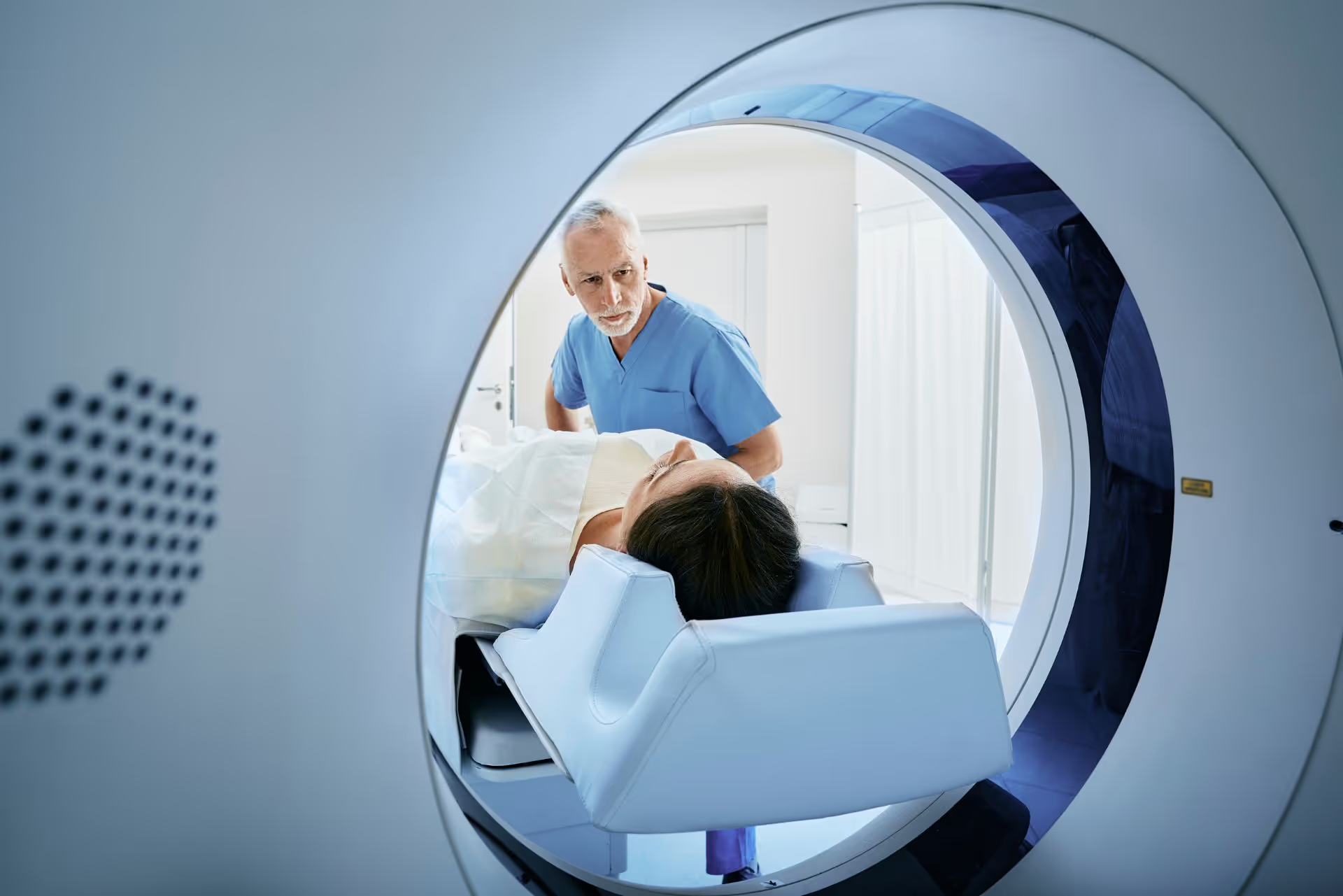
The radiographer who is operating the MRI scanner will show you into the room and will help you get into the right position on the couch. They will use pads and pillows to help you get comfortable so that you can remain still during the scan.Some people need to have a contrast medium to produce more detailed images, which involves an injection of dye. The dye is injected into a vein in your arm, which can make it feel a bit warm for a short while. If you need a contrast medium, you may also need to have a blood test before your scan as a precaution and to check your kidney function.The MRI scanner is approximately four feet long and is open at both ends. During the scan, the couch is moved so that the body area being examined is in the centre of the scanner. You’ll be given headphones or earplugs to wear because the machine makes a loud humming noise.The radiographer will be in the control room, but you’ll be able to talk to them via an intercom and they can see you on a screen. You’ll need to keep completely still while the images are being recorded. If you’re feeling worried or uncomfortable, just let the radiographer know and they will do what they can to help.
.png)
.png)