Frequently asked questions
Prime Health is here to keep you well and help you make the right health decisions so we've gathered a list of frequently asked questions about our centres and the wide range of services we provide.
No, you do not require a referral from a healthcare professional. You can self-refer for varicose vein treatment at Prime Health Surrey. Find out more about varicose veins and the treatment options available in our blog article "Understanding Varicose Veins and The Treatment Options Available".
Unlike varicose vein surgery, EVLT requires a shorter recovery time. You can return to normal day to day activities soon after treatment as this truly is a walk-in, walk-out treatment.Find out more about varicose veins and the treatment options available in our blog article "Understanding Varicose Veins and The Treatment Options Available".
The radiographer will not be able to give you any results at the time of your appointment. After the scan, the images will be examined by the radiologist who is responsible for producing a written report on their findings to send to your referring clinician. More than 80% of our reports are with your doctor within two days.To book an X-ray today with Prime Health - click here
Varicose veins are a common medical problem affecting men and women of all ages. Often developing in the legs and feet, varicose veins are swollen and enlarged and are often bulging in appearance. Whilst some individuals may not experience any pain or discomfort with varicose veins, others may be affected by their long-term consequences such as swelling, phlebitis, venous eczema, itching, pain and even ulceration. However, treatment for varicose veins is available and may help ease symptoms, improve the appearance and prevent skin damage.Find out more about varicose veins and the treatment options available in our blog article "Understanding Varicose Veins and The Treatment Options Available".
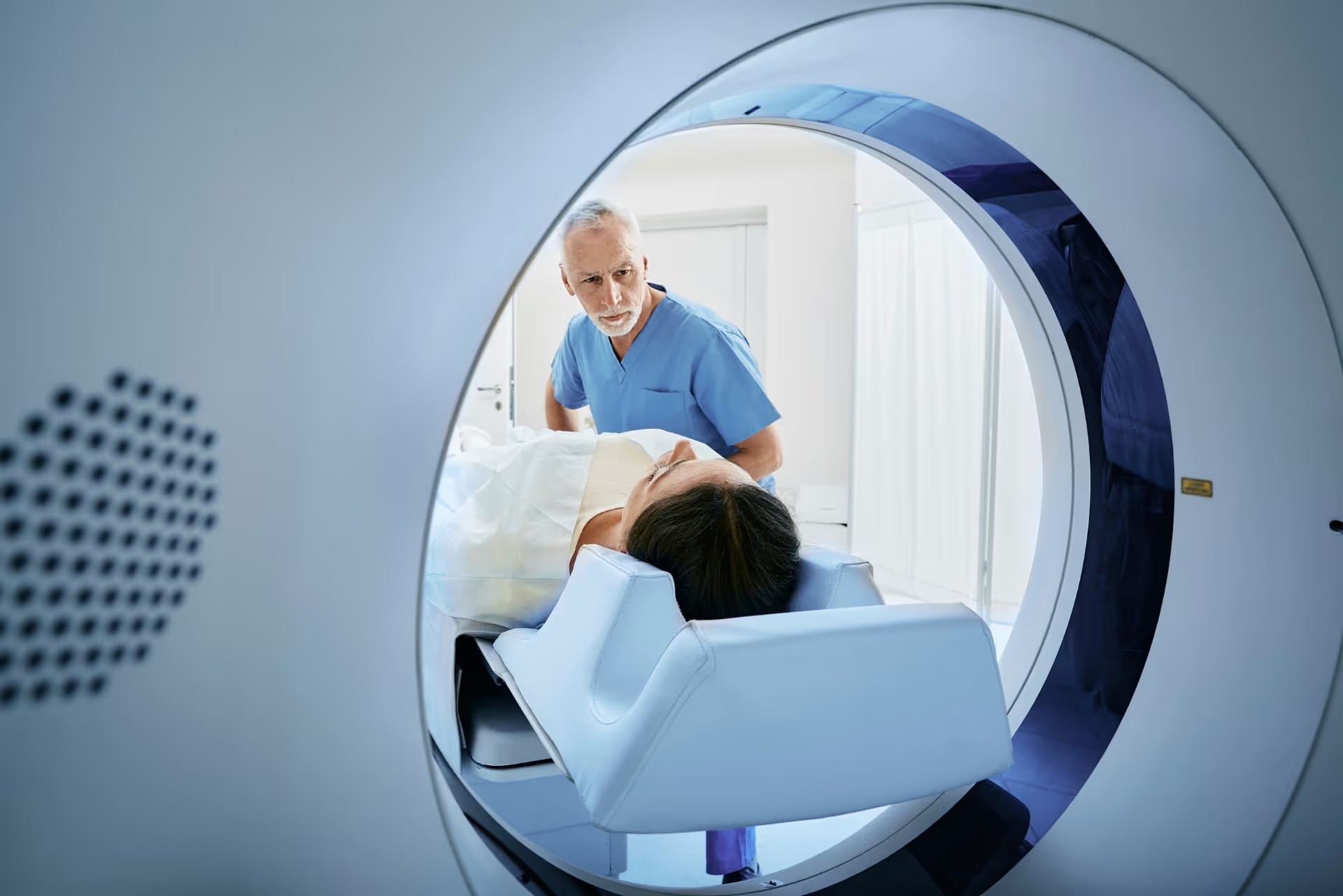
You’ll be asked to lie on a scanning bed. The lights may be dimmed so that the images on the screen are as sharp as possible.
- The radiologist/sonographer will put some gel on your skin. This allows the sensor to be moved around more easily and helps produce sharper images
- Depending on where you have the scan, you may be asked to take deep breaths and to hold your breath for a few moments. For a bladder scan, if your bladder isn’t full enough, you may be asked to have another drink
- The radiologist/sonographer will slowly move the sensor over your skin while looking at the images on the screen. They’ll record some of these to study in detail later. When it’s all done, they’ll wipe off the gel, and you’ll be free to go
The radiographer will ask you to confirm some details, including your identity. Once in the x-ray room, you will be advised on the position required for the examination. You may be asked to lie on the table or stand against the equipment so that the part of your body being examined is in the correct position.The radiographer will stand behind a screen to take the x-ray.You will need to stay still so the image isn’t blurred, but you won’t feel anything and should feel quite comfortable.
An x-ray is a widely used diagnostic test. It is an effective way of examining the internal structures of the body and can be used to help detect a range of conditions or monitor against existing conditions.
Yes, you can eat and drink as normal.
During your appointment, you’ll be looked after by a small, specialised team, including a radiographer who will carry out the x-ray.
The x-ray itself will only take a few seconds, but the radiographer may need to take further x-rays in different positions. This usually takes no more than 5 -10 minutes. Your appointment from start to finish is likely to be about 20 minutes.
.png)
.png)