Frequently asked questions
Prime Health is here to keep you well and help you make the right health decisions so we've gathered a list of frequently asked questions about our centres and the wide range of services we provide.
PSA testing allows men to undergo prostate cancer checks. We know men can have significant prostate cancer with a normal PSA. An MRI Prostate offers the opportunity to identify significant prostate cancer in those men whose PSA has been speculated to be normal for their age. Data from the re-imagine study group showed that high quality MRI scan using T2 and DWI (diffusion weighted imaging) sequences by high volume reporting radiologists picked up significant cancer in 1 in 6 men who had an upfront MRI. Some of these men had a PSA less than 3ng/ml, who would not be eligible for further investigations under some guidelines. There is growing evidence especially from UK research groups, Re-Imagine and IP1 prostagram study which shows then benefit of MRI being able to pick up significant prostate cancers without over diagnosis.The NHS is working hard to improve cancer diagnosis at an earlier stage. Re-Imagine and IP1 prostatgram study helps provide research evidence to support screening MRI as an adjunct to PSA.Prostate health checks using MRI allows significant cancers to be detected earlier and therefore allows patients to have a range of curative treatment options or active surveillance at the earliest opportunity.
There is currently no national screening programme for prostate cancer in the UK. However, if you are aged 50 or over and would like to have your PSA levels tested you can arrange for it to be carried out by your GP or online for a fee. If results show you have a raised level of PSA, your GP may suggest further tests including an MRI scan or a biopsy.
You may have had a recent proven infection where the PSA needs repeating in 6 weeks, or a clinical diagnosis of prostate cancer where surgery and radiotherapy are not appropriate due to your ill health or inability to undergo treatment e.g. you may have life limiting diseases or conditions.
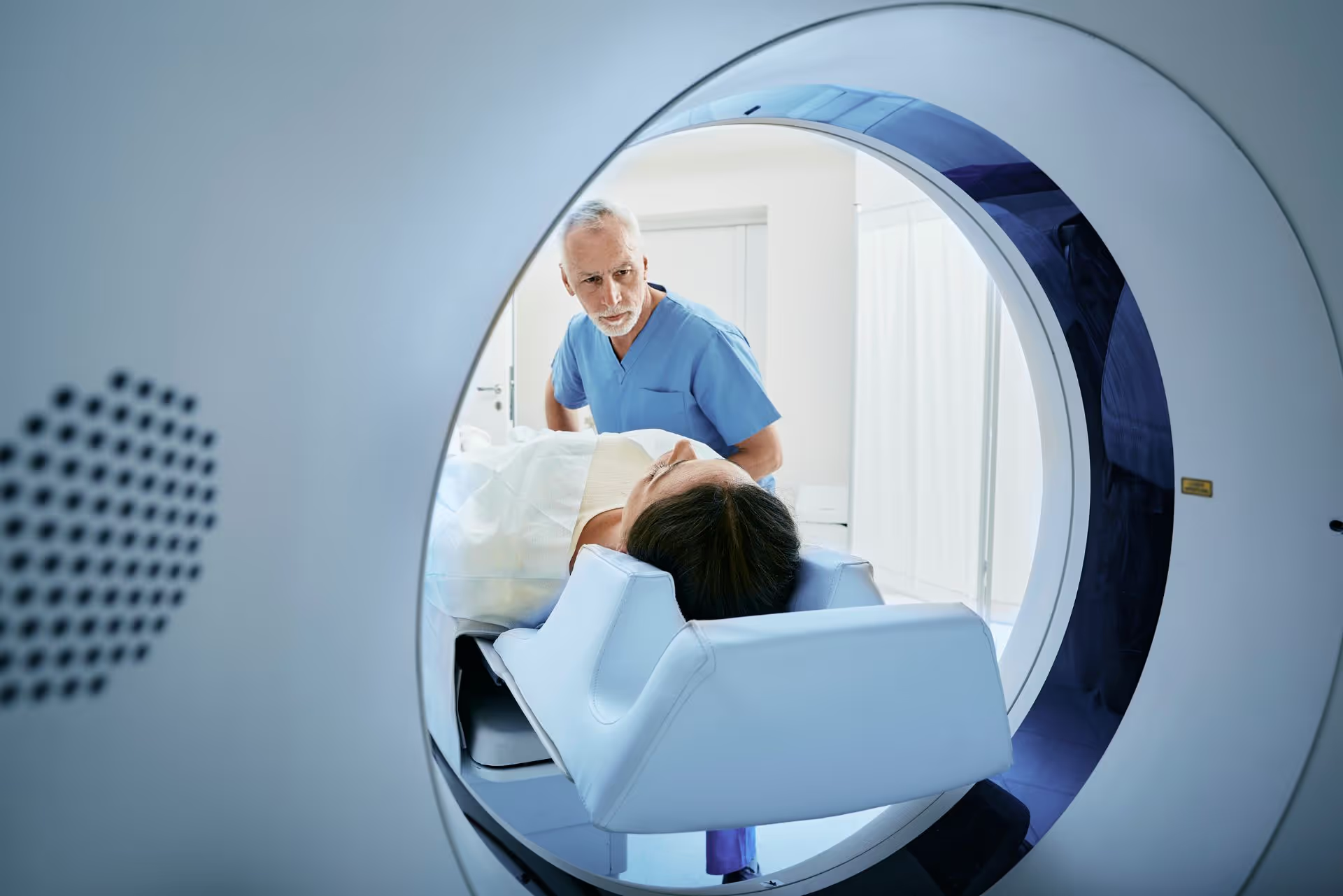
A multiparametric MRI (mpMRI) scan of the prostate can take about 60 – 90 minutes and the appointment should last around an hour. A biparametric MRI (bpMRI) scan can take around 60 minutes.
A biparametric MRI scan is offered to men displaying no symptoms and with a PSA Level in the normal range. If you have a raised PSA level or a GP/Consultant referral, we will recommend you have a multiparametric MRI scan. Depending on your medical background, individual requirements and/or symptoms, our Care-Coordinators will liaise with our clinical team of urology and prostate experts to determine whether you have a biparametric or multiparametric MRI scan.
While prostate cancers are often seen as slow-developing tumours, speed is still important when it comes to diagnosis. You will receive your results within 48 hours of your scan. We will share all results with your GP or with your consultant, if you have a consultant referral. We communicate directly with your GP or consultant providing your report and access to your scan images.
The water pipe known as the urethra passes through the prostate. As the urethra is squeezed by a change in prostate size, symptoms can develop.These symptoms may present with difficulty in passing urine or waking up at night, often disturbing sleep for men and their partners. It is difficult to distinguish from symptoms alone if they are related to age-related growth of the prostate or cancer.This is where a GP can offer counselling about the merits of further tests, such as the PSA.
For a Multiparametric MRI (mpMRI) it is necessary to inject a contrast medium (gadolinium), a liquid dye that is used to enhance the appearance of anatomy during an MRI scan. The dye is injected into a vein in your arm. If you need a contrast medium, you may also need to have a blood test before your scan as a precaution and to check your kidney function. For mpMRI and Biparametric MRI (bpMRI), you may require an injection of a drug called Buscopan. The constant peristaltic movement of the bowel inside your abdomen can cause blurring of the images making them difficult to interpret. Buscopan is an antispasmodic agent that temporarily slows down this movement and improves the quality of the images. It is most commonly injected through a cannula inserted into a vein, usually in the arm or back of your hand. It will remain there until your scan is finished.
Yes, you can self-refer for private prostate MRI if you are experiencing prostate problems and have a PSA level test result.
A consultant urologist will review your symptoms and test results to determine what risk group you are of prostate cancer. Your risk group is a way to categorise the severity of your case and will help inform what treatment options you are offered.There are 3 general risk groups based on the PSA level, Digital Rectal Examination, MRI results and biopsy, and these will determine what treatment your doctor recommends:
- Low risk: Tumour is confined to the prostate, and the PSA is <10 and grade group 1 (Gleason 6). Your doctor may recommend active surveillance or watchful waiting.
- Intermediate risk: Tumour is confined to the prostate, the PSA is between 10 and 20, or grade group 2 or 3 (Gleason 7). Your doctor may recommend active surveillance or watchful waiting, and only start treatment if the cancer starts to grow.
- High risk: Tumour extends outside the prostate, the PSA >20, or grade group 4 or 5 (Gleason 8 to 10). Your doctor will recommend treatment which might include surgery, chemotherapy, radiotherapy, HIFU or hormone therapy.
.png)
.png)